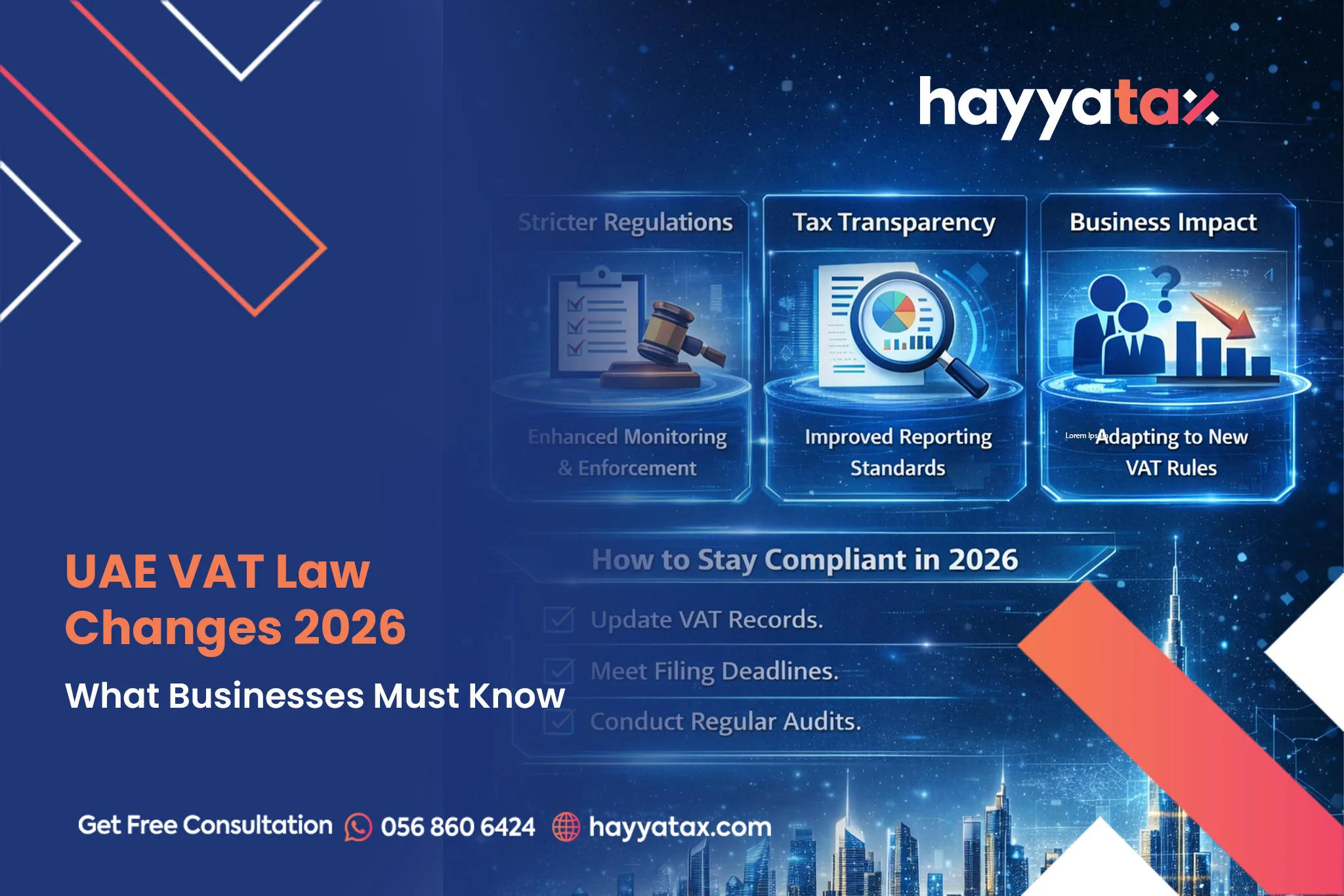
UAE VAT Law Changes 2026 are introducing new compliance expectations and regulatory updates that businesses across the UAE must understand. The Federal Tax Authority (FTA) continues to enhance monitoring systems, enforce stricter compliance measures, and improve tax transparency.
For businesses operating in the UAE, understanding the UAE VAT Law Changes 2026 is essential to avoid penalties and ensure proper tax compliance.
In this article, we explain the latest UAE VAT updates, their impact on businesses, and what companies should do to stay compliant in 2026.
Overview of UAE VAT
The UAE introduced VAT on January 1, 2018, at a standard rate of 5% under Federal Decree-Law No. (8) of 2017. The tax is administered by the Federal Tax Authority (FTA) and applies to most goods and services supplied in the UAE.
VAT plays a crucial role in diversifying the UAE economy and supporting sustainable government revenue.
For businesses operating in the UAE, proper VAT compliance is essential to avoid penalties and ensure smooth operations.
Key UAE VAT Law Changes in 2026
1. Stricter VAT Compliance Requirements
The Federal Tax Authority is increasing monitoring of businesses through advanced digital systems and data analytics.
What this means for businesses:
-
Increased VAT audits
-
Detailed review of VAT returns
-
Higher penalties for incorrect filings
-
Stronger focus on documentation and record keeping
Businesses must maintain accurate accounting records, proper invoices, and supporting documents to ensure compliance.
2. Move Toward E-Invoicing and Digital Reporting
The UAE is gradually moving toward electronic invoicing systems and digital tax reporting.
Expected developments include:
-
Standardized electronic invoices
-
Automated reporting systems
-
Integration between accounting software and FTA platforms
Companies should begin preparing their accounting systems for future e-invoicing requirements.
3. Changes in Input Tax Recovery
Updates in VAT rules may impact how businesses claim input VAT on certain expenses, especially in sectors like:
-
Real estate
-
Financial services
-
Businesses with mixed taxable and exempt supplies
Proper classification of expenses is important to ensure correct VAT recovery and avoid compliance issues.
4. Alignment Between Corporate Tax and VAT
With the introduction of UAE Corporate Tax, authorities are aligning VAT compliance with financial reporting and tax filings.
Businesses should ensure:
-
VAT returns match accounting records
-
Financial transactions are properly documented
-
Tax records are accurate and transparent
Any discrepancies between tax filings may trigger FTA audits or investigations.
5. Stronger Penalties for Non-Compliance
The Federal Tax Authority continues to enforce stricter penalties for businesses that fail to comply with VAT regulations.
Common penalties may apply for:
-
Late VAT registration
-
Late VAT return filing
-
Incorrect VAT calculations
-
Failure to maintain tax records
Businesses should regularly review their VAT compliance procedures to avoid financial penalties.
How Businesses Can Prepare for VAT Changes
To stay compliant with the latest UAE VAT regulations in 2026, businesses should:
- Conduct regular VAT compliance reviews
- Maintain accurate financial and accounting records
- Ensure invoices meet FTA requirements
- Train accounting staff on updated VAT rules
- Seek professional VAT advisory services
Taking proactive steps helps businesses reduce compliance risks and improve financial management.
How HayyaTax Can Help Your Business
Navigating UAE VAT regulations can be complex for many businesses. Professional guidance ensures compliance and reduces the risk of penalties.
HayyaTax is a professional tax consultancy providing comprehensive tax and compliance services for businesses across the UAE.
Our services include:
-
VAT Registration
-
VAT Return Filing
-
VAT Compliance Review
-
Corporate Tax Advisory
-
Accounting and Bookkeeping
-
FTA Audit Assistance
Our experienced tax professionals help businesses stay compliant with UAE tax regulations while optimizing tax efficiency.
Conclusion
The UAE VAT Law Changes in 2026 highlight the government’s continued focus on improving tax compliance and transparency.
Businesses must stay informed about regulatory updates and ensure their accounting systems and tax practices are aligned with the latest rules.
Working with experienced tax advisors like HayyaTax can help businesses manage VAT obligations efficiently while focusing on growth and operational success.
Need help with UAE VAT compliance?
Contact HayyaTax today for professional VAT advisory, tax filing, and compliance services tailored to your business needs.